
Last Updated on May 9, 2026 by dhruwuttam58
Introduction
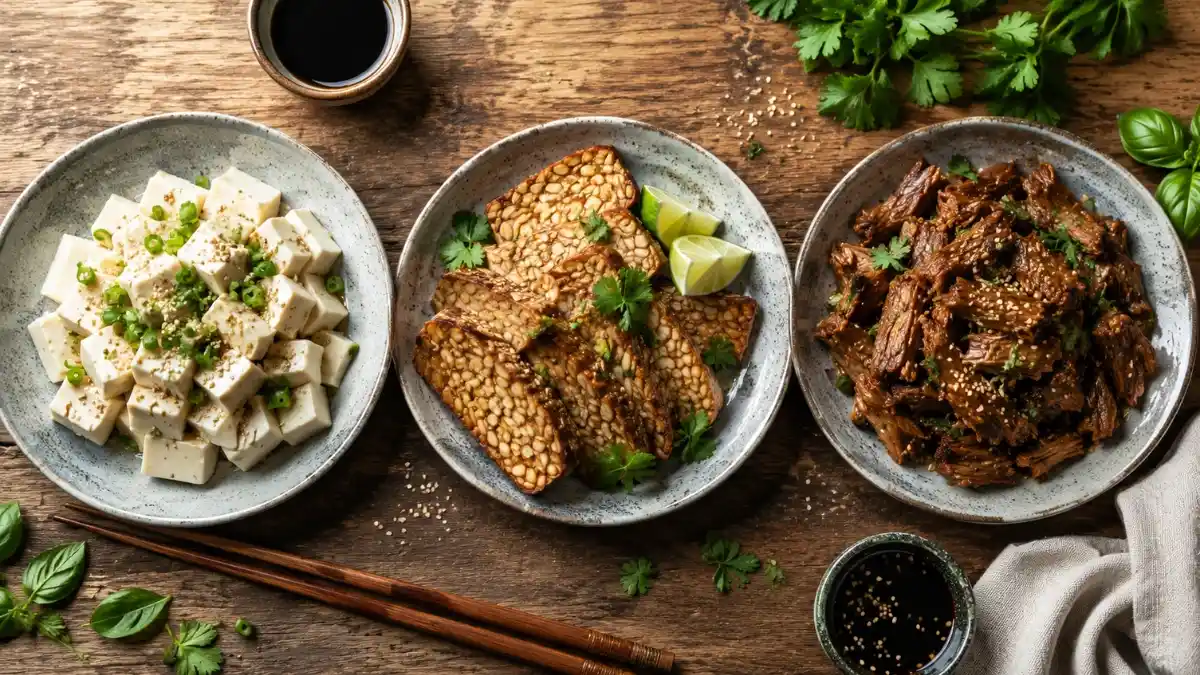
Walk into any health food store, and you’ll find all three displayed side by side: a block of pale tofu, a slab of earthy tempeh, and a chewy log of seitan. If you’re new to plant-based eating — or even if you’ve been vegan for years — the choice between seitan tempeh tofu isn’t always obvious.
They all get called “vegan protein,” but that’s roughly where the similarities end. Tofu is mild and silky. Tempeh is a fermented soy product with a nutty, dense bite. Seitan is made from wheat gluten and has a texture so chewy that it impresses meat-eaters in tacos and sandwiches.
This guide covers the full tempeh vs tofu vs seitan comparison — protein content, digestibility, cooking applications, and which one fits your goals.
Quick Summary
- Tofu is best for low-calorie, beginner-friendly vegan meals.
- Tempeh is a fermented vegan protein with higher fiber and gut health benefits.
- Seitan contains the most protein and has the most meat-like texture.
- Gluten-free eaters should stick with tofu or tempeh.
Table of Contents
What Is Seitan Tempeh Tofu?
These three proteins come from different sources and behave uniquely in your kitchen and in your body.
What Is Tofu?
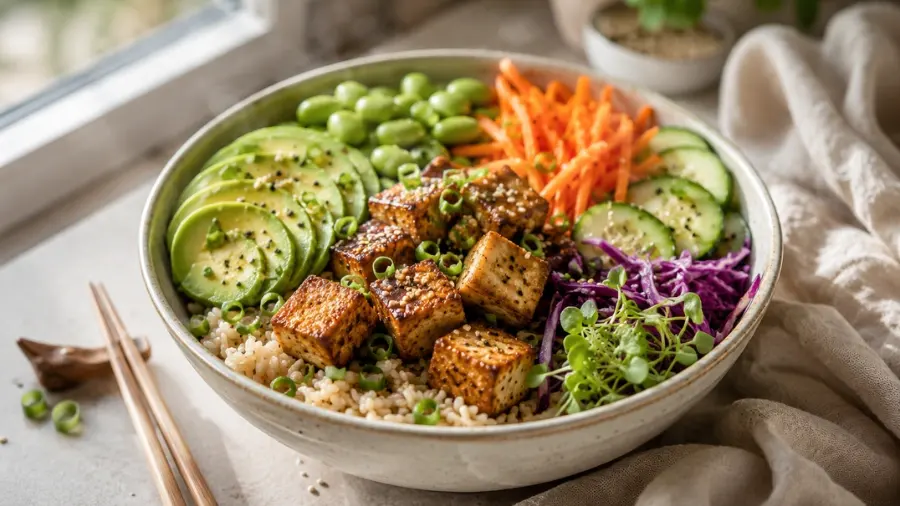
Tofu is made from coagulated soy milk pressed into blocks — essentially the same process as dairy cheese, just with soybeans. It comes in silken, soft, firm, and extra-firm varieties.
Because it’s gluten-free, affordable, and has almost no flavor of its own, tofu is one of the easiest vegan proteins to cook with.
Extra-firm tofu usually browns much better after pressing for 15–20 minutes to remove excess moisture.
It absorbs marinades and sauces well, making it incredibly versatile.
Best for: beginners, gluten-free diets, scrambles, soups, curries, and stir-fries.
What Is Tempeh?
Tempeh is whole soybeans fermented with a mold culture called Rhizopus oligosporus, then pressed into a firm cake. Unlike tofu, it has a distinct flavor — earthy, nutty, and slightly mushroomy.
The fermentation process makes tempeh a proper fermented vegan protein. It also breaks down some of the naturally occurring antinutrients in soy, making digestion easier.
Best for: gut-conscious eaters, high-protein meals, sandwiches, stir-fries, and anyone who wants more complex soy flavor.
What Is Seitan?
Seitan is made from vital wheat gluten — the protein left when wheat starch is washed away. It’s one of the highest-protein whole foods in any diet, vegan or otherwise.
Its texture is dense and chewy in a way no other plant protein matches.
Store-bought seitan textures vary widely by brand, so experimenting helps if your first try feels too soft or overly spongy.
Season it properly, and seitan genuinely earns a spot in BBQ sandwiches, tacos, and stews.
Best for: high-protein diets, meat-like texture needs, fitness-focused meals. Not suitable for gluten-free diets.
Tempeh vs Tofu vs Seitan: Key Differences
| Feature | Tofu | Tempeh | Seitan |
|---|---|---|---|
| Protein (per 100g) | ~8g | ~19g | ~25g |
| Calories (per 100g) | ~76 | ~193 | ~370 |
| Fermented? | No | Yes | No |
| Texture | Soft / silky | Firm / grainy | Chewy / meaty |
| Gluten-Free? | Yes | Yes | No |
| Best Uses | Scrambles, soups, curries | Stir-fries, bowls, sandwiches | Tacos, stews, BBQ |
| Beginner-Friendly? | Very easy | Moderate | Moderate |
| Best For | Low-calorie vegan meals | Gut-friendly fermented meals | High-protein fitness meals |
For more ways to build complete plant-based plates, check out High Protein Vegan Recipes for Every Meal (2026).
Seitan vs Tempeh for Protein and Texture
Which Has More Protein?
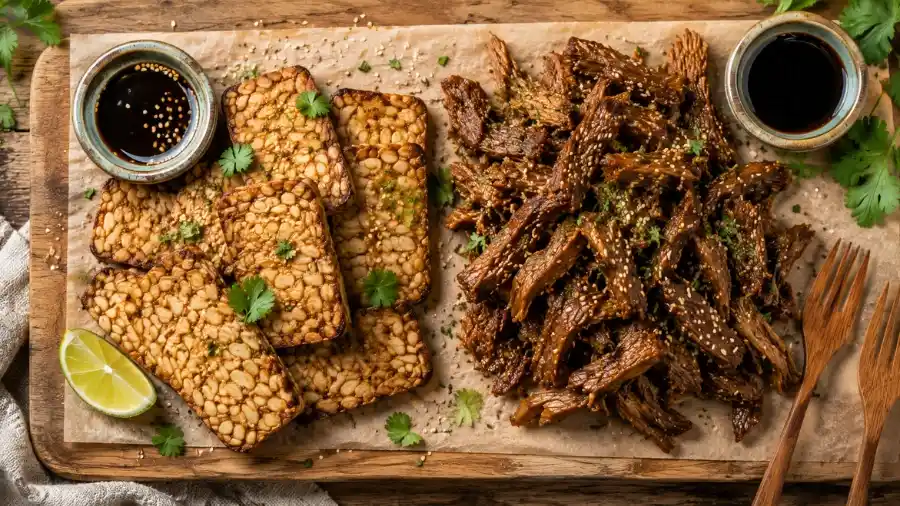
Seitan contains significantly more protein — around 25g per 100g versus tempeh’s ~19g and tofu’s ~8g. If raw protein numbers are the priority, seitan is the clear front-runner.
That said, seitan is relatively low in lysine compared to soy-based proteins. Both tofu and tempeh, being soy-based, offer a more complete amino acid profile. For most people, eating a varied plant-based diet isn’t a dealbreaker — but worth knowing if you’re tracking nutrition closely.
Which Is Better for Muscle Gain?
Any of these three can support muscle building if you’re consistently hitting your daily protein target. Seitan is a good source of protein with relatively few extra calories. Tempeh combines a high protein content with fiber, iron, and manganese.
If whole foods alone aren’t enough to hit your targets, a quality vegan protein powder helps fill the gap. See recipe ideas using both MyProtein and Future Kind products in Easy Vegan Protein Powder Recipes for Every Meal.
Which Tastes More Like Meat?
Seitan, without question. The chewy, fibrous texture mimics pulled chicken or beef in a way tofu and tempeh simply can’t. Season it with soy sauce, smoked paprika, and garlic, and most people who aren’t specifically looking for the difference won’t catch it.
Tempeh handles bold marinades well, but it retains its earthy, grainy quality. If a meat-like texture is the goal, seitan is your answer.
Fermented Vegan Protein Benefits Explained
Why Fermentation Matters
Fermentation breaks down phytic acid — an antinutrient in unfermented soy that can reduce mineral absorption. In tempeh specifically, this makes iron, zinc, and calcium more bioavailable than in regular tofu.
Fermented foods also support gut microbiome diversity. Harvard Health has also highlighted the potential gut-health benefits of fermented foods like tempeh.
Is Tempeh Easier to Digest Than Tofu?
For many people, yes. Fermentation pre-digests some of the complex carbohydrates and proteins in soybeans, which can reduce bloating that some people experience with standard soy products. Individual responses vary — some people do perfectly fine with tofu. But if you’ve had issues with soy in the past, tempeh is worth trying.
Who Should Avoid Seitan?
Anyone with celiac disease or non-celiac gluten sensitivity needs to avoid seitan entirely — it’s essentially pure gluten. Tofu and tempeh are both naturally gluten-free. For a full breakdown of gluten-free, dairy-free protein sources, see: How to Get Protein When Gluten and Dairy Free.
Which Vegan Protein Is Healthiest in 2026?
Best for high-protein diets: Seitan. Nothing in the whole-food plant-based world comes close to its protein density per calorie.
Best for gut health: Tempeh. The fermentation process and improved mineral bioavailability make it a more functionally complex food than plain tofu.
Best for low-calorie meals: Tofu — at ~76 calories per 100g with decent protein, it’s ideal for high-volume, lower-calorie plates like veggie stir-fries and soups.
Best for gluten-free vegan diets: Tofu or tempeh. For certified gluten-free protein powder options to pair with these foods, see: Best Dairy-Free Gluten-Free Protein Powder (2026).
Best Ways to Cook Seitan Tempeh Tofu
Note: Nutrition values are approximate and may vary depending on ingredient brands, portion sizes, and preparation methods.
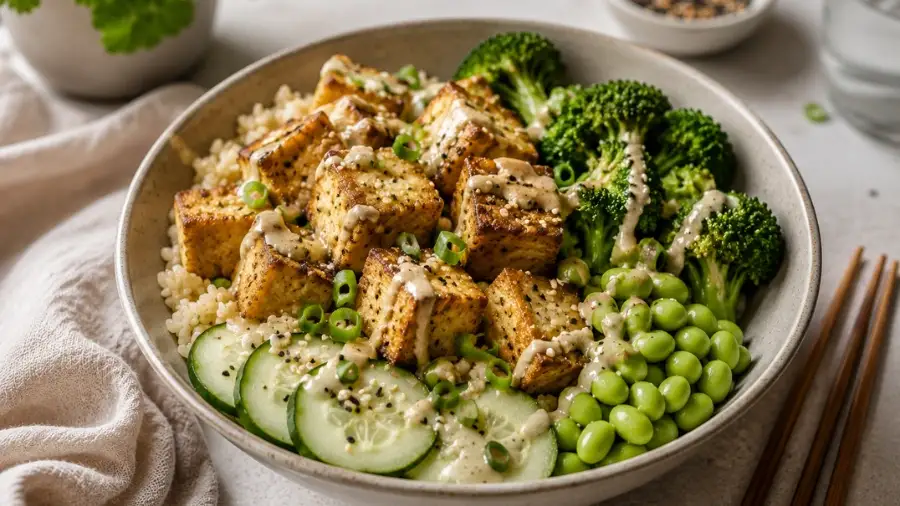
Recipe 1: Crispy Air Fryer Tofu Bowl
Prep: 10 min | Cook: 18 min | Protein per serving: ~22g (with edamame)
Ingredients:
- 200g extra-firm tofu, pressed and cubed
- 1 tbsp soy sauce (or tamari for gluten-free)
- 1 tbsp rice vinegar
- 1 tsp sesame oil
- 1/2 tsp garlic powder
- 1/2 tsp smoked paprika
- To serve: cooked brown rice, steamed edamame, sliced cucumber, sesame seeds
Instructions:
- Press tofu for at least 15 minutes using a clean towel and a heavy pan. Cut into 2cm cubes.
- Toss with soy sauce, rice vinegar, sesame oil, garlic powder, and paprika.
- Arrange in a single layer in the air fryer. Cook at 200°C (390°F) for 16–18 minutes, shaking halfway.
- Serve over brown rice with edamame, cucumber, and sesame seeds.
Tip: Add a drizzle of sriracha-tahini dressing for extra richness.
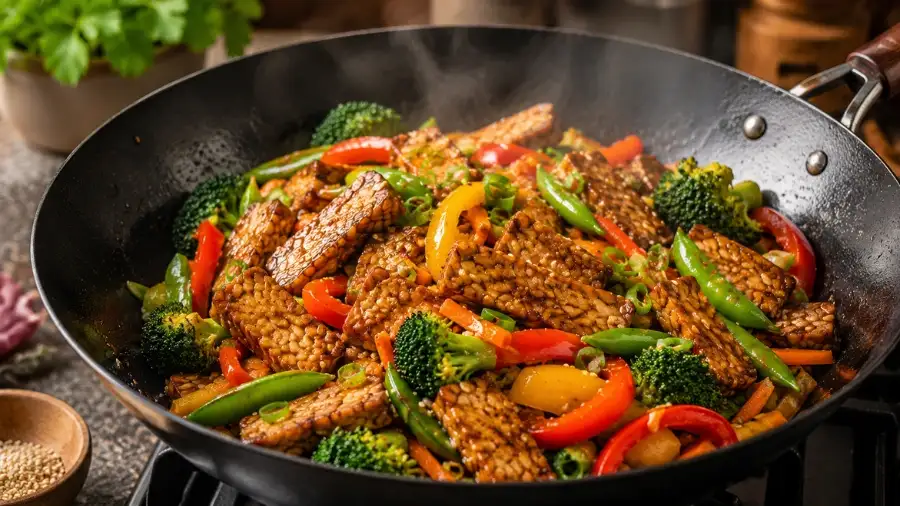
Recipe 2: Marinated Tempeh Stir-Fry
Prep: 10 min + 30 min marinating | Cook: 12 min | Protein per serving: ~28g
Marinating tempeh before cooking is the step most people skip — and it makes the biggest difference.
Steaming tempeh for a few minutes before marinating can further reduce its bitterness. It softens the earthy bitterness and pulls bold flavor throughout.
Ingredients:
- 200g tempeh, sliced into strips
- 2 tbsp soy sauce
- 1 tbsp maple syrup
- 1 tbsp apple cider vinegar
- 1 tsp fresh ginger, grated
- 2 garlic cloves, minced
- 1 tbsp neutral oil for stir-frying
- Mixed vegetables: broccoli, bell pepper, snap peas
Instructions:
- Combine soy sauce, maple syrup, vinegar, ginger, and garlic. Add tempeh strips and marinate for at least 30 minutes (overnight is better).
- Heat oil in a wok over medium-high heat.
- Cook tempeh for 3–4 minutes per side until golden and slightly crisp.
- Add vegetables and remaining marinade. Stir-fry for 4–5 minutes until just tender.
- Serve over noodles or rice.
Tip: Top with sliced green onions and a squeeze of lime.
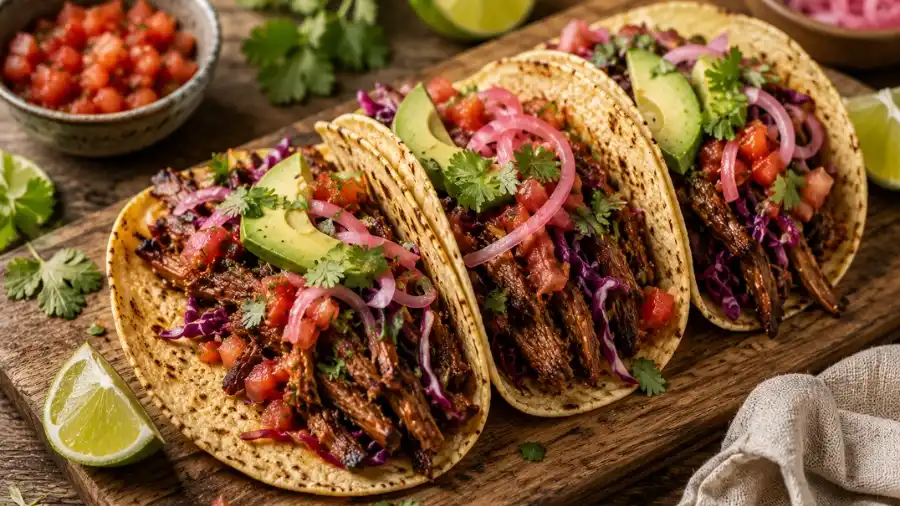
Recipe 3: High-Protein Seitan Taco Filling
Prep: 5 min | Cook: 15 min | Protein per serving: ~30g
When seasoned properly, seitan pulls and shreds like slow-cooked meat. This savory approach is often the recipe that converts skeptics.
Ingredients:
- 200g seitan, shredded or roughly chopped
- 1 tbsp olive oil
- 1 tsp cumin
- 1 tsp smoked paprika
- 1/2 tsp chili powder
- 1/2 tsp garlic powder
- 2 tbsp soy sauce
- Juice of 1/2 lime
- To serve: corn tortillas, avocado, salsa, shredded cabbage
Instructions:
- Heat oil in a skillet over medium heat. Add the shredded seitan and cook for 3–4 minutes, until it starts to crisp.
- Add all spices and soy sauce. Stir to coat evenly.
- Cook another 5–6 minutes until the seitan is well-seasoned and lightly caramelized on the edges.
- Squeeze lime juice over the top, then pile into warm corn tortillas.
- Top with avocado slices, salsa, and shredded cabbage.
Tip: Also works great in burritos or as a taco bowl base over rice—more ideas at: Seitan Recipes: 10 Easy High-Protein Vegan Meals.
Best Vegan Protein Products to Try
MyProtein Vegan Range: MyProtein offers several plant-based blends with clearly labeled ingredients and decent flavor variety. Their plant-based blend uses pea and rice protein for a more complete amino acid profile than single-source powders.
Future Kind: If you prefer a shorter ingredient list and certified vegan formulas, it’s worth a look: minimal fillers and a straightforward formulation.
Vegan Recipe eBooks: If you want structured meal frameworks instead of random individual recipes, explore these best raw food cookbooks for beginners for more plant-based meal inspiration and recipe-planning ideas.
For budget-friendly, protein-packed week planning, see: 10 Easy Vegan Meal Prep for Weight Loss (High Protein).
Final Verdict: Which Vegan Protein Wins?
The honest answer is none of them “wins” outright — they each do something the others don’t. The smartest move is learning when to reach for each one.
Choose tofu if you’re new to plant-based cooking, need a gluten-free, low-calorie base, or you’re making soups, scrambles, or curries.
Choose tempeh if you want a fermented vegan protein that’s easier on digestion, prefer a complete amino acid profile from soy, or want more texture and a bolder flavor.
Choose seitan if you need maximum protein per serving, you’re cooking for people who miss the texture of meat, or you’re building high-protein meals for training.
Ideally, rotate all three. Each one offers something different nutritionally and texturally, and eating a variety of plant proteins is generally better than sticking with just one. For one-pot ideas that work with any of them, this is worth bookmarking: Easy Vegan One Pot Meals: High Protein & Quick.
Frequently Asked Questions
Is tempeh healthier than tofu?
In some ways, yes. Tempeh has more protein, more fiber, and minerals that are potentially more bioavailable thanks to fermentation. But tofu is lower in calories and equally nutritious overall. Both are healthy — they just shine in different situations.
Is seitan gluten-free?
No. Seitan is made from vital wheat gluten and contains significant amounts of it. Anyone with celiac disease or gluten sensitivity should avoid it and choose tofu or tempeh instead.
Which has the most protein?
Seitan has approximately 25g per 100g. Tempeh follows at ~19g, and tofu is lowest at roughly 8g per 100g. Keep in mind that tofu and tempeh both offer a more complete amino acid profile than seitan.
Can you eat tempeh every day?
For most people, yes. The clinical evidence doesn’t support concerns about daily soy in healthy adults. If you have a thyroid condition or known soy sensitivity, check with your doctor — but daily tempeh is fine for most.
Which vegan protein is easiest to digest?
Tempeh is often the easiest, as fermentation pre-digests some of the harder compounds in soybeans. Tofu is also well-tolerated. Seitan is fine for those without gluten issues, though some find wheat-based foods heavier on the stomach.
What is the best tofu for beginners?
Extra-firm tofu. It holds its shape during cooking, handles pan-frying, baking, and air-frying without falling apart, and absorbs marinades well. Silken tofu is better reserved for smoothies, dressings, and desserts once you’re comfortable with the basics.