
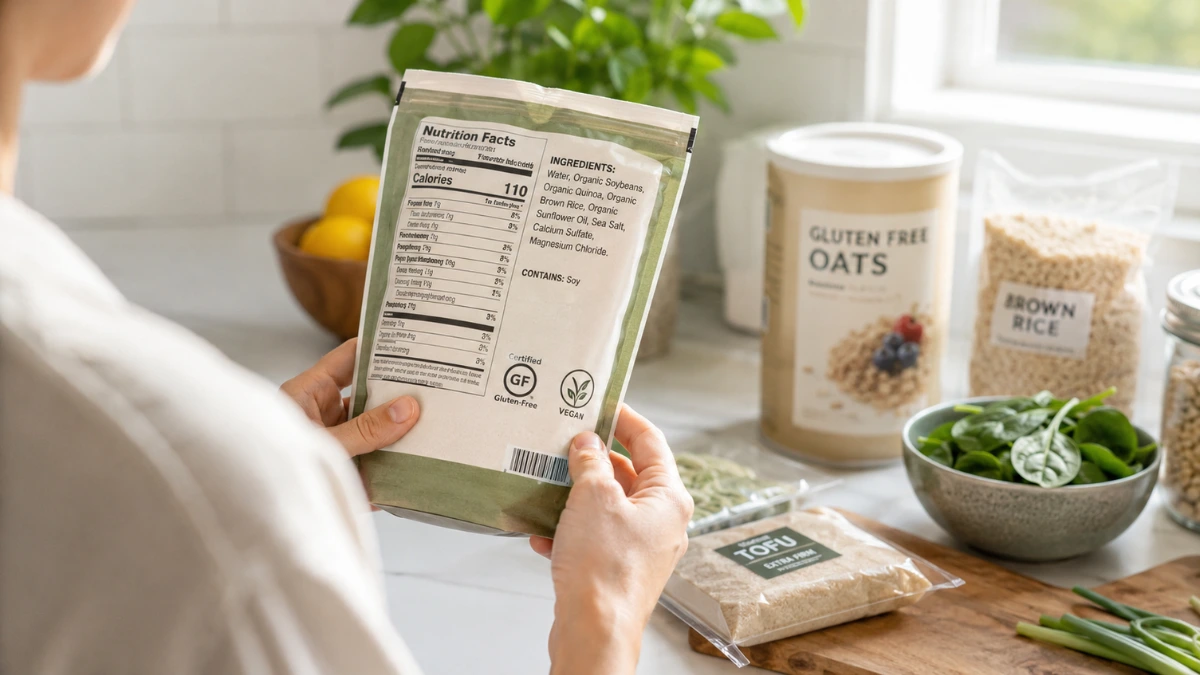
Last Updated on May 25, 2026 by dhruwuttam58
Introduction
If you’re building gluten free vegan lunch ideas into your daily routine, one thing is worth knowing upfront: ‘vegan’ and ‘gluten-free’ are not the same thing. A lot of plant-based foods contain wheat, barley, or rye.
Others look safe but are processed on shared equipment, and some ingredients hide gluten under names most shoppers wouldn’t recognize on a label.
This isn’t a recipe guide. It’s about keeping your lunches genuinely safe, from the grocery aisle to your plate.
We’ll cover hidden gluten sources, cross-contamination risks, and label reading, whether you’re managing celiac disease, a diagnosed intolerance, or simply eating more carefully.
Quick Safety Checklist
- Check sauces and dressings carefully — soy sauce often contains wheat
- Avoid shared toasters and fryers, both at home and when eating out
- Use a dedicated cutting board for gluten-free meal prep
- Look for certified gluten-free labels, not just ‘wheat-free’ claims
- Bring individual condiment portions to work instead of using shared jars
Table of Contents
What Makes Gluten Free Vegan Lunch Ideas Difficult to Keep Safe?
The challenge is rarely an obvious piece of bread in your salad. It’s the soy sauce in your marinade, the flavoring in a vegan snack bar, or the salad dressing that says ‘plant-based’ on the front while wheat starch sits quietly in the ingredient list.
‘Wheat-free’ doesn’t legally mean the same as ‘gluten-free’ in most markets.
A product can be entirely plant-based and still contain barley malt, rye extract, or wheat-based coatings — particularly in flavored tofu, ready-made falafel, or anything breaded.
Then there’s contamination. Even safe ingredients can pick up gluten from shared prep surfaces or equipment. That’s often what catches people off guard, especially in shared kitchens and busy office break rooms.
Hidden Gluten Ingredients That Often Go Unnoticed
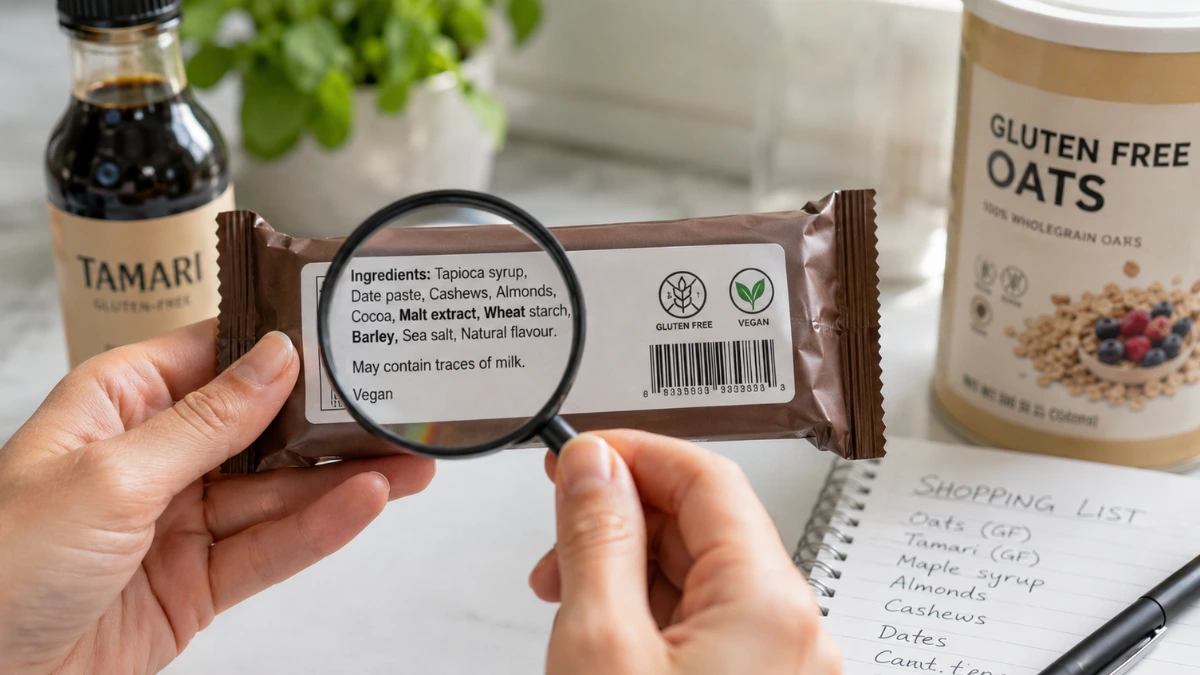
Soy Sauce, Marinades, and Dressings
Traditional soy sauce is brewed with wheat. It’s one of the most common hidden gluten sources in plant-based cooking precisely because it doesn’t seem like a risk. Bottled salad dressings are similar — thickeners like wheat starch and malt vinegar turn up in products you’d never expect.
Tamari is usually the safer swap, but check the label — some brands contain wheat. Store-bought sauces and dressings are worth checking carefully, not just the front-of-pack claim.
Plant-Based Meats and Vegan Convenience Foods
Seitan is made from wheat gluten. That’s not an incidental ingredient — it is the ingredient. For anyone avoiding gluten, it’s off the table entirely.
Beyond seitan: breaded vegan chicken, plant-based nuggets, frozen vegan meals, sausages, and burgers frequently use wheat flour or breadcrumbs for texture and coating. ‘Vegan’ on the label tells you nothing about gluten content.
Oats, Granola, and Snack Bars
Oats are naturally gluten-free, but almost always processed alongside wheat, barley, and rye. Standard oats are not safe for celiac disease — only oats specifically labeled certified gluten-free have been grown and processed to avoid that cross-contact.
Granola and vegan snack bars carry the same risk. Barley malt syrup is commonly used as a sweetener, and most conventional rolled oats haven’t been certified. Check rather than assume, even with products marketed as health food.
Restaurant and Takeout Lunch Risks
Even a dish that sounds safe — a salad, rice bowl, or tofu stir-fry — can pick up gluten from shared fryers, contaminated prep surfaces, or soy-based sauces. French fries are a classic example: naturally gluten-free, but often fried in the same oil as battered products.
When ordering out, ask specifically about shared fryers and prep areas, not just ingredients. Beyond Celiac also provides practical guidance for eating safely at restaurants and avoiding cross-contact.
Cross Contamination Lunch Tips for Safer Vegan Meals
Shared Utensils and Cutting Boards
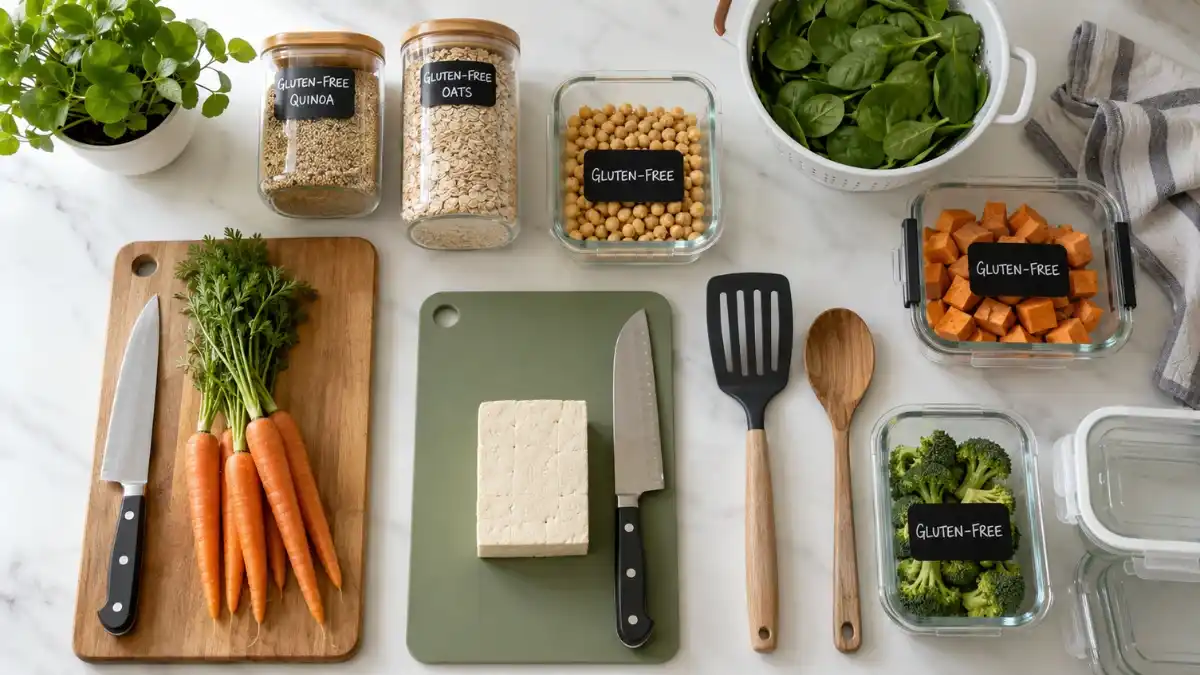
Shared cutting boards can leave behind traces of gluten, especially in busy kitchens, even after rinsing. Wooden surfaces are especially problematic — they absorb residue that soap and water don’t fully remove.
The fix is simple: a clearly marked dedicated board for gluten-free prep. Shared toasters are another common issue — using a separate toaster for gluten-free bread is usually the safer option in shared kitchens.
Meal Prep Containers and Storage Safety
- Use dedicated airtight containers for gluten-free lunches
- Store gluten-free items on a separate fridge shelf, away from wheat-containing foods
- Prep gluten-free components first if working in a mixed household
Workplace Kitchen Risks
In busy workplace kitchens, shared microwaves and condiment stations can increase the risk of accidental gluten exposure. A simple microwave-safe cover over your container keeps that residue off your food. Communal condiment jars — hummus, peanut butter, dipping sauces — get contaminated quickly through double-dipping. Bringing your own individual portions is the easiest workaround.
Packing Safer Gluten-Free Vegan Lunches
These cross contamination lunch tips share a common thread: control your environment. Pack your own lunch in sealed containers, keep original packaging until ready to use so you can double-check certifications, and store your lunch in a fully closed bag in any shared fridge — not an open bowl.
Shared Kitchen Gluten Free Tips for Everyday Meal Prep
How to Reduce Crumb Contamination at Home
Counters are the most overlooked contamination surface. Wiping with a shared cloth that’s already touched crumbs can spread crumbs or residue across the surface. Use a fresh cloth or paper towel for your gluten-free prep area, and wipe the surface down with hot soapy water first.
For baking trays and roasting pans used by others, a sheet of parchment paper provides a clean barrier — or keep a separate tray dedicated to gluten-free cooking.
Safe Pantry Organization Strategies
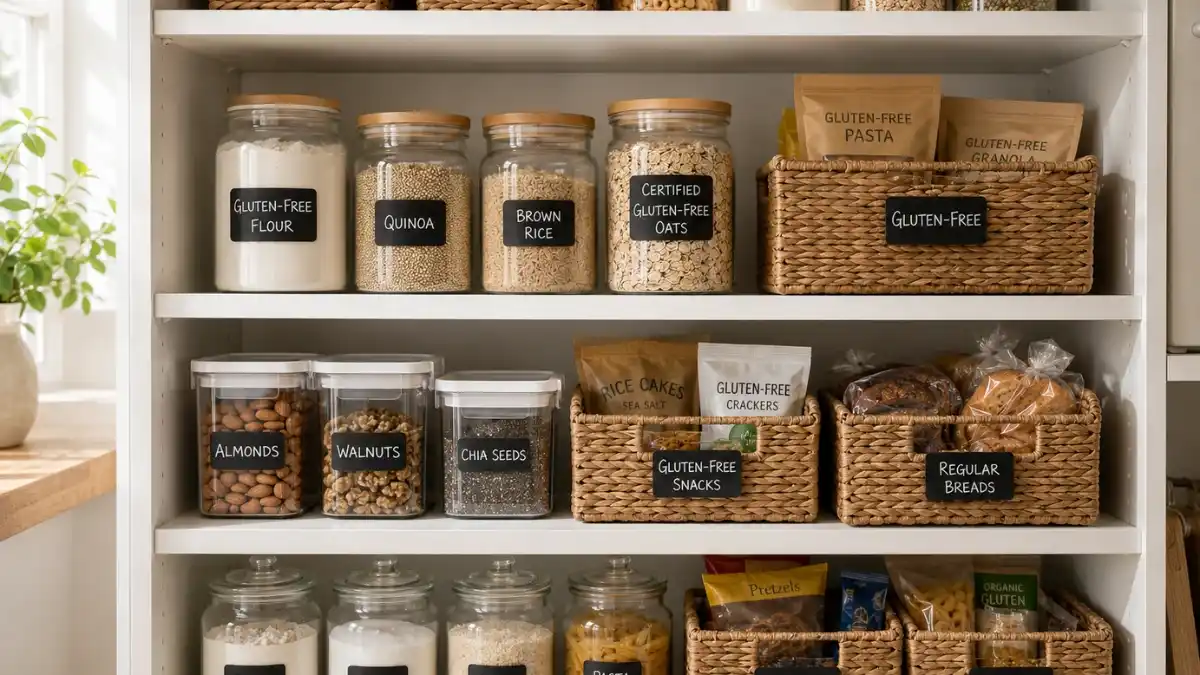
- Store gluten-free dry goods on a separate labeled shelf
- Use sealed, labeled containers to prevent shared scoops from contaminating contents
- If shelf space is limited, a designated basket works just as well — what matters is clear separation
Family Kitchens and Mixed Diet Households
A brief conversation with housemates or family about why dedicated equipment matters goes a long way. Keep it practical, not dramatic. Simple rules like replacing lids without dipping used utensils and keeping gluten-free items in one designated area take the decision-making out of every meal.
How to Choose Celiac Safe Vegan Food More Confidently
Understanding Certified Gluten-Free Labels
Certified gluten-free labels provide extra reassurance because the product has been independently tested. Certification marks from organizations like the Celiac Disease Foundation’s verified list indicate actual third-party testing, not just manufacturer self-declaration.
Always check the full ingredient statement alongside any front-of-pack claim. A product can say ‘gluten-free’ on the front and still note ‘may contain traces of wheat’ in the fine print. Those statements indicate different levels of risk. The Celiac Disease Foundation has up-to-date guidance on what certification marks to look for.
Ingredients That Commonly Contain Hidden Gluten
A few names catch people out repeatedly:
- Malt, malt vinegar, malt extract, malt flavoring — almost always derived from barley
- Wheat starch, modified wheat starch, wheat dextrin — common thickeners in sauces and condiments
- Barley extract, barley flour — appear in some health food products
- Triticale — a wheat-rye hybrid, not always recognized as a gluten source
- Spelt, einkorn, emmer — ancient wheats that still contain gluten, despite their ‘alternative’ reputation
Safer Grocery Store Choices for Busy Days
Whole, unprocessed foods are your most reliable option on busy days. Lentils, chickpeas, plain tofu, rice, quinoa, fresh vegetables, nuts, and seeds are naturally gluten-free and don’t require careful label checking in their unprocessed forms.
For packaged convenience, prioritize products with a certified gluten-free mark over a simple label claim. Minimally processed options — plain rice cakes, canned beans, unflavored seed butters — carry far less risk than heavily processed vegan convenience foods. If you want verified protein options that meet both vegan and gluten-free standards, our guide to the best dairy-free gluten-free protein powder covers what to look for.
Common Mistakes With Gluten Free Vegan Lunch Ideas
Assuming Vegan Means Gluten-Free
This is the most widespread misconception. Veganism avoids animal products; gluten-free eating avoids specific grain proteins. They don’t overlap automatically. Seitan is entirely made from wheat gluten. Many vegan pastries, sauces, and processed snacks rely on wheat flour. A ‘vegan’ label tells you nothing about gluten content — you have to check both separately.
Trusting Labels Without Checking Ingredients
Front-of-pack claims can be helpful, but the ingredient list usually tells the full story. A ‘natural’ snack or ‘clean label’ bar can still contain barley, wheat starch, or malt extract. Getting into the habit of reading the actual ingredient statement — rather than just the headline claim — is one of the most reliable safeguards you have.
Using Shared Kitchen Equipment Too Casually
Even small traces of gluten can become an issue for people with celiac disease. Traces from a shared spoon, a briefly rinsed colander, or a reused chopping board can be enough. Using separate equipment consistently helps reduce accidental exposure.
Depending Too Much on Highly Processed Foods
Heavily processed vegan convenience foods carry more hidden gluten risk — and tend to be less nutritious. Shifting toward whole foods naturally reduces both problems. For practical guidance on balanced plant-based protein sources that work within these constraints, our complete guide to getting protein when gluten and dairy free is helpful to review.
How to Keep Gluten Free Vegan Lunches Balanced and Practical
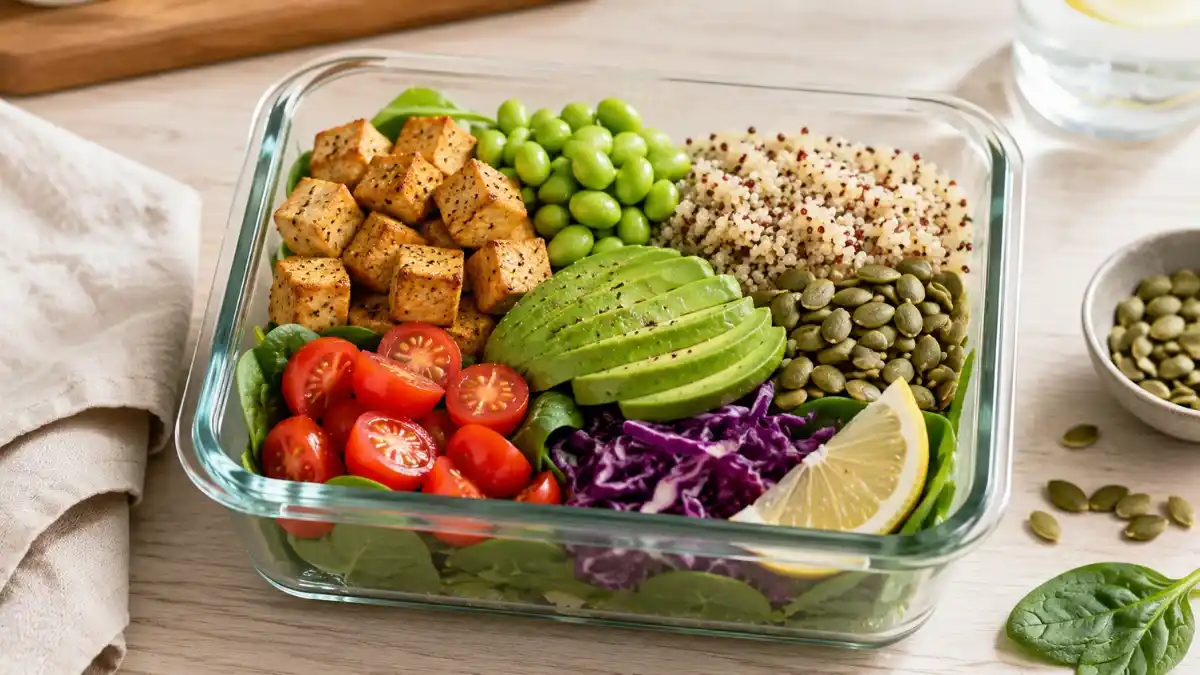
Safe doesn’t mean restricted. The key is a reliable base of ingredients you know work, then adding variety within that.
For protein: beans, lentils, plain tempeh (check labels — some brands add wheat), certified gluten-free tofu, edamame, and seeds like hemp and pumpkin all work well. Fiber looks after itself when you’re eating plenty of legumes and vegetables, but quinoa, brown rice, and certified gluten-free oats are solid replacements for wheat-based staples. Avocado, olive oil, and nut butters handle healthy fats without adding complexity.
The broader principle is simple: the more whole and unprocessed your ingredients, the fewer label-reading decisions you need to make. For specific recipe ideas built around these staples, our easy vegan gluten free lunch recipes guide offers practical options for every skill level.
FAQs About Gluten Free Vegan Lunch Ideas
Are vegan foods always gluten-free?
No. Vegan foods avoid animal products, not gluten. Seitan is made from wheat gluten. Many vegan snacks, sauces, and convenience foods contain wheat-based ingredients. Always check the ingredient list separately, regardless of any ‘vegan’ or ‘plant-based’ label.
What are the safest gluten free vegan lunch ingredients?
Whole, minimally processed foods: plain tofu, lentils, chickpeas, quinoa, rice, sweet potato, fresh vegetables, seeds, and certified gluten-free oats. These need minimal label scrutiny. Once you move into packaged products, certified gluten-free labeling becomes essential.
How can I avoid gluten cross-contamination at work?
Use a fully sealed lunch container. Cover your food in the shared microwave. Bring individual condiment portions rather than using shared jars. Wipe down communal prep surfaces before use. Store your lunch in a closed bag in the shared fridge.
Are oats safe for gluten-free vegan diets?
Only when labeled certified gluten-free. Standard oats are processed in shared facilities with wheat and barley — the contamination risk is high. Certified gluten-free oats have been grown and processed specifically to avoid that contact.
What does ‘certified gluten-free’ actually mean?
It means the product has been independently tested to meet recognized gluten-free safety standards — not just self-declared by the manufacturer. For anyone with celiac disease, that certification mark matters more than a front-of-pack claim.
Conclusion
Keeping your gluten free vegan lunch ideas safe comes down to consistent habits: checking ingredient labels rather than front-of-pack claims, using dedicated equipment, understanding where cross-contamination happens, and leaning on whole foods. None of this is about anxiety or restriction — it’s about practical confidence. Once these checks become routine, safe gluten-free vegan lunches stop feeling like an effort. For more on what to cook within these principles, our vegan and gluten free lunch ideas guide is a good next step.