
Last Updated on May 4, 2026 by dhruwuttam58
If you’ve ever stared at a nutrition label wondering how to hit your protein goals without gluten or dairy, you’re not alone in this. Cutting out those two ingredients can feel like removing the floor from under your diet—suddenly, the chicken-and-whey-shake routine everyone recommends doesn’t work for you.
The good news? You don’t need either to eat well and get enough protein. Plants, legumes, and a handful of smart food combinations can cover everything your body needs—without the bloating, the flare-ups, or the dietary compromise. This guide gives you a practical breakdown of exactly how to make it work.
Table of Contents
Quick Answer: How to Get Protein When Gluten and Dairy Free
Short answer: You can meet your protein needs with whole foods like lentils, tofu, quinoa, and seeds.
Build meals around legumes, soy foods, and gluten-free grains, then use protein powder only when you need convenience or extra support.
- Legumes and soy → main protein sources
- Seeds and grains → support protein intake
- Consistency matters more than perfection
Choose simple, repeatable meals that fit your daily routine.
Who This Guide Is For
This is for you if you’re:
- Living with celiac disease or non-celiac gluten sensitivity
- Dairy intolerant or avoiding dairy for health or ethical reasons
- Following a vegan or plant-based lifestyle
- Trying to build a higher-protein diet without animal products or gluten-containing foods
- Just confused about where protein actually comes from when the obvious sources are off the table
You don’t need to be a nutritionist to make this work. You need the right starting point.
Why Protein Matters
Protein is the building block your body uses to repair muscle, produce enzymes, support hormone production, and maintain immune function. Skip enough of it, and you’ll notice—slower recovery, constant hunger, low energy, and brain fog that won’t clear.
Most adults need around 0.7–1g per pound of body weight, depending on activity level. A 150-pound person doing moderate exercise is looking at roughly 105–150g daily. That’s a real number—and yes, you can hit it without chicken breast, Greek yogurt, or whey protein.
Gluten-Free Dairy-Free Protein Foods
Here’s where most of your protein should come from—whole-food sources, naturally free of gluten and dairy, and easy to work into everyday meals.
Legumes
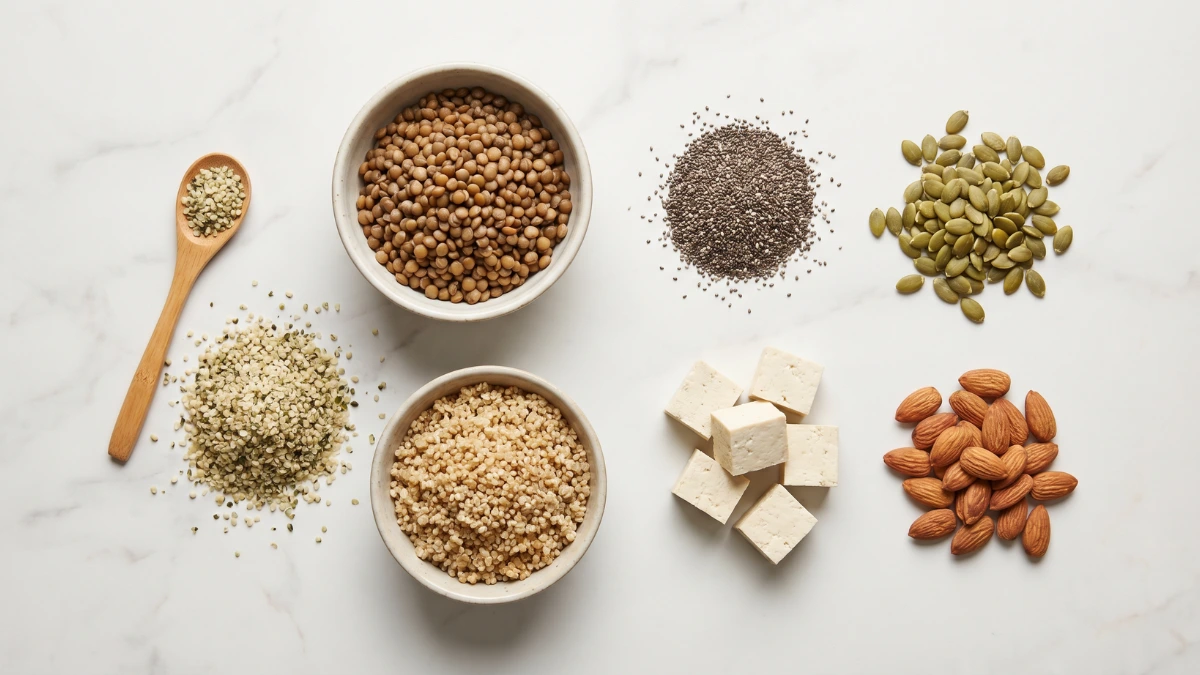
Legumes are your best friend on this kind of diet. Lentils alone pack about 18g of protein per cooked cup. Chickpeas, black beans, kidney beans, and split peas all sit in the 14–17g range. They’re also high in fiber, iron, and folate—which matters when you’re cutting out fortified grain products.
One thing to know: Legumes are low in methionine (an essential amino acid). Pair them with rice, quinoa, or seeds throughout the day, and you’ve covered that gap.
Soy Foods
Soy is the only complete plant protein—meaning it contains all nine essential amino acids in meaningful amounts. Tofu gives you around 10g per half cup; tempeh is even better at 15–16g; and edamame comes in at around 17g per cup. All are naturally gluten-free (check labels on flavored versions).
If you’re concerned about soy and hormones, the current weight of research suggests moderate consumption is safe and beneficial for most people. The Harvard T.H. Chan School of Public Health has a clear breakdown.
Nuts and Seeds
Hemp seeds are the standout here—10g of protein per 3 tablespoons, with a solid omega-3 profile. Pumpkin seeds, chia seeds, and flaxseeds all add meaningful amounts (5–8g per serving). Almonds, peanuts, and cashews contribute as well, though they’re more of a supporting role than a primary source.
Seeds are particularly useful because they’re easy to add without changing the flavor much—sprinkle on salads, blend into smoothies, mix into oatmeal.
Gluten-Free Grains
Most grains are low in protein, but quinoa is different—it’s a complete protein at about 8g per cooked cup. Amaranth and buckwheat (gluten-free despite the name) both come in around 5–6g per cup. These make an excellent base for bowls and salads, especially when you pile on legumes and seeds.
High Protein Gluten Free Dairy Free Meals Plan
The easiest way to build high-protein meals without overthinking it: follow a simple formula.
Protein base + gluten-free grain or starchy veg + healthy fat + vegetables
Here’s what that looks like in practice:
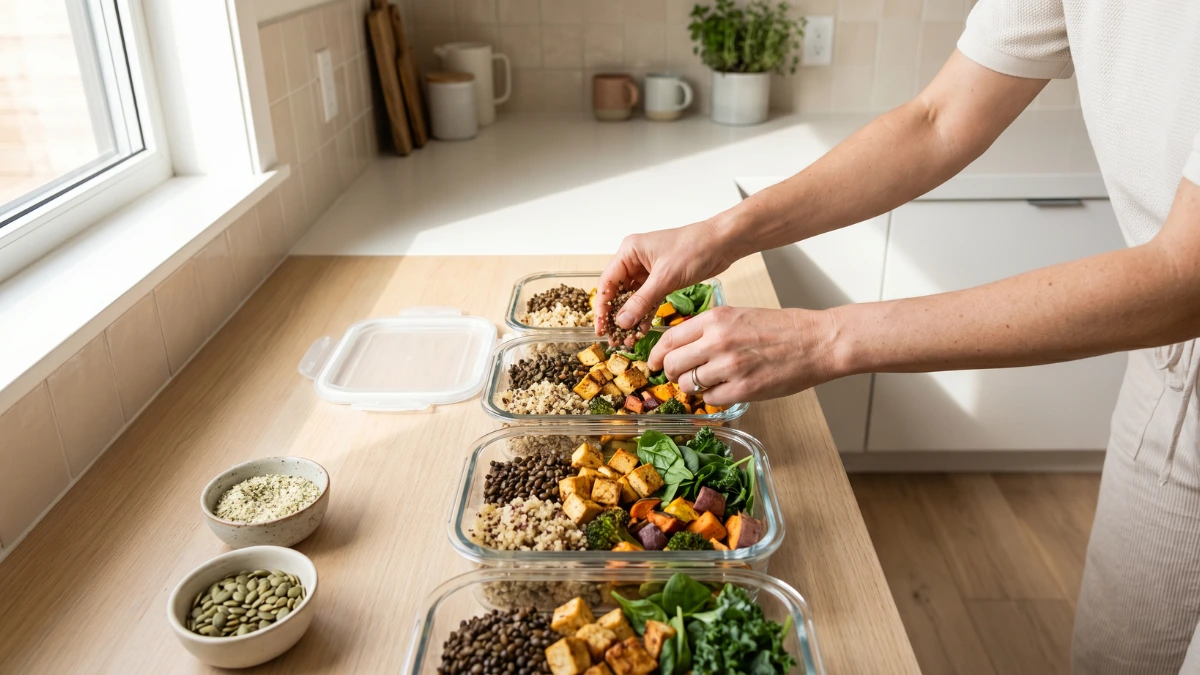
Lentil Power Bowl
A simple, balanced meal you can put together in about 20 minutes.
- Protein base: 1 cup cooked lentils (~18g protein)
- Grain: ½ cup quinoa (~4g protein)
- Vegetables: roasted sweet potato, spinach, cherry tomatoes
- Healthy fat: tahini drizzled on top
- Extra boost: 2 tbsp hemp seeds (~6g protein)
Layer everything into a bowl while the quinoa is still warm, which helps the tahini blend in naturally and brings the whole dish together.
Total protein: ~28g
Tofu Stir-Fry with Rice Noodles
Quick, satisfying, and easy to make on a busy day.
- Protein base: 200g firm tofu, pan-fried in sesame oil (~18g protein)
- Carb: rice noodles
- Vegetables: broccoli, snap peas, bell peppers
- Sauce: tamari, garlic, ginger
- Extra: pumpkin seeds for crunch
Cook the tofu until lightly crisp, then toss everything together in one pan—the sauce coats the noodles and vegetables evenly with little effort.
Total protein: ~24g
Black Bean Breakfast Scramble
A high-protein breakfast that’s simple, filling, and surprisingly quick.
- Protein base: sauté ½ cup black beans (~8g protein)
- Vegetables: peppers, onions
- Flavor: cumin, paprika, garlic
- Serving: gluten-free corn tortillas
- Extras: avocado and salsa
Cook everything in one pan until the beans are warm and slightly crisp, then serve in tortillas with avocado and salsa for a complete meal.
Total protein: ~18–20g
For a more detailed weekly framework, check out our guide to vegan meal prep for weight loss—it covers batch-cooking strategies that translate directly to gluten-free and dairy-free eating.
How to Get Enough Protein on a Dairy Free Gluten Free Diet
The question isn’t “where do I get protein?”—you now know the answer. The harder part is consistently getting enough of it throughout the day.
Daily Strategy: Spread It Out
Your body can only use so much protein at once for muscle synthesis—research suggests around 25–40g per meal is the practical ceiling for most people. So rather than eating one huge protein-dense meal and calling it done, spread your intake across three to four meals. Aim for at least 20g per main meal.
Portion Awareness
You don’t need to weigh everything obsessively, but having a rough mental model helps. A serving of lentils gives you about 18g. Tofu, 10–16g depending on the type. Hemp seeds, 10g per 3 tablespoons. Once you know your anchor portions, hitting 70–100g daily becomes a system, not a struggle.
Consistency Over Perfection
One great day followed by three low-protein days doesn’t produce results. Find 5–6 meals you like that are also high in protein. Rotate them. Don’t overthink the rest.
For evidence-based direction without the hype, the NIH’s dietary guidelines resource is worth a read.
For a broader overview, see our best gluten-free dairy-free protein guide.
Do You Need Protein Powder?
Short answer: probably not—but it depends on your situation.
If you’re eating three solid meals a day with at least one or two high-protein sources per meal, whole foods can cover you. Most people underestimate how much protein they already get from legumes, seeds, and soy foods once they start tracking for a week.
That said, protein powder earns its place in a few specific situations:
- You train hard 4–5 days a week, and your protein needs are above 130g daily
- You have a genuinely busy schedule, and meal prep isn’t realistic every day
- You’re in a cutting phase and want high protein without a lot of extra calories
- You don’t love eating large amounts of food
When you do use powder, pea protein and plant-based blends are the most common options for people avoiding gluten and dairy—both are well tolerated. For a detailed breakdown, see our guide on the best dairy-free gluten-free protein powder.
Food vs Protein Powder: A Quick Comparison
| Factor | Whole Foods | Protein Powder |
|---|---|---|
| Protein per serving | 14–18g (lentils, tofu) | 20–25g (per scoop) |
| Cost | Lower (especially legumes) | Moderate to high |
| Convenience | Requires preparation | Quick and easy |
| Nutrient density | High (fiber, vitamins) | Lower (isolated protein) |
| Satiety | High (more filling) | Lower (digests quickly) |
| Digestive tolerance | Varies (legumes may cause bloating initially) | Varies (pea protein is generally easier to digest) |
| Best use | Daily nutrition | Convenience and recovery |
Best Approach Based on Your Goal
-
Natural whole-food eating:
Build meals around legumes, soy foods, seeds, and gluten-free grains. No supplements needed. -
Convenience first:
Use a protein shake alongside one solid meal to maintain consistent intake. -
Muscle gain:
Combine whole foods with protein powder to meet higher daily protein needs. -
Digestive sensitivity:
Start with simple foods like lentils, tofu, and rice, then gradually add variety.
Common Mistakes to Avoid
- Relying on vegetables alone for protein. Broccoli has protein, but not nearly enough to build a diet around. It’s a complement, not a source.
- Ignoring gluten cross-contamination. Oats labeled “gluten-free” matter—standard oats are often processed in shared facilities. Always check.
- Eating the same one or two foods every day. Variety covers your amino acid spread and prevents nutrient deficiencies over time.
- Forgetting to track, even briefly. Just seven days of rough tracking can reveal big gaps you didn’t know were there.
- Assuming dairy-free products are protein-rich. Many vegan cheeses, butters, and milks have almost no protein. Don’t count them.
Digestion Tips for a High-Legume Diet
Beans and lentils can cause bloating, especially when you first ramp up your intake. Here’s how to manage it:
- Soak dried beans for 8–12 hours before cooking and discard the soaking water. This removes a significant amount of the oligosaccharides that cause gas.
- Start with lentils before beans. Lentils are the most digestible legume and a good entry point if your gut isn’t used to them.
- Add digestive spices. Cumin, fennel, asafoetida (hing), and ginger all support digestion and work well in legume-based dishes.
- Increase fiber slowly. Going from a low-fiber diet to a high-legume diet overnight stresses your gut. Ramp up over two to three weeks.
- Stay hydrated. Fiber needs water to move through your system. Simple, but often overlooked.
Healthline’s breakdown of digestive health on plant-based diets is a helpful read if you’re navigating this for the first time.
Related Guides You May Find Helpful
Frequently Asked Questions
Is it hard to get enough protein without gluten and dairy?
Not as hard as most people think. The challenge is usually unfamiliarity—once you know which foods to build meals around (lentils, tofu, tempeh, quinoa, seeds), hitting 70–100g of whole foods daily is very achievable. It takes a few weeks of habit-building, not a complete overhaul.
What’s the best plant protein source for someone new to this diet?
Lentils are the best starting point—cheap, versatile, easy to cook, and among the most digestible legumes. Red lentils, in particular, cook quickly and blend seamlessly into soups and curries. Tofu is a close second for people who are comfortable cooking it.
Can I build muscle on a gluten-free, dairy-free diet?
Yes, absolutely. The key variables are total protein intake (targeting around 1g per pound of body weight), consistent resistance training, and adequate calorie intake. None of those require gluten or dairy. Many competitive athletes follow plant-based diets that are free of both.
Are gluten-free grains lower in protein than regular grains?
Most standard grains are low in protein to begin with. Quinoa (8g per cup) actually outperforms most wheat-based products. Buckwheat and amaranth are solid options, too. The gap is smaller than people assume, and the rest of your diet easily fills it.
Should I take any supplements on a gluten-free, dairy-free diet?
Protein aside, the nutrients most commonly low on this type of diet are vitamin B12, vitamin D, calcium, iodine, and iron. If you’re fully plant-based, B12 supplementation is non-negotiable. For the others, get blood work done and supplement based on actual deficiency rather than guessing. Talk to a registered dietitian if you’re unsure.
Final Thoughts
Getting enough protein on a gluten-free and dairy-free diet is completely doable—it requires knowing which foods to rely on and building solid eating habits around them. Legumes, soy foods, seeds, and gluten-free grains can meet most of your protein needs without supplements.
The biggest shift is mental, not physical. Once you stop thinking of protein as something that only comes from whey and chicken, you start seeing how rich your options actually are.
Start with one or two of the meal examples in this guide. Track your intake for a week. Adjust from there. That’s all it takes.