
Last Updated on May 4, 2026 by dhruwuttam58
Introduction: Why High-Protein Vegan Meals Matter
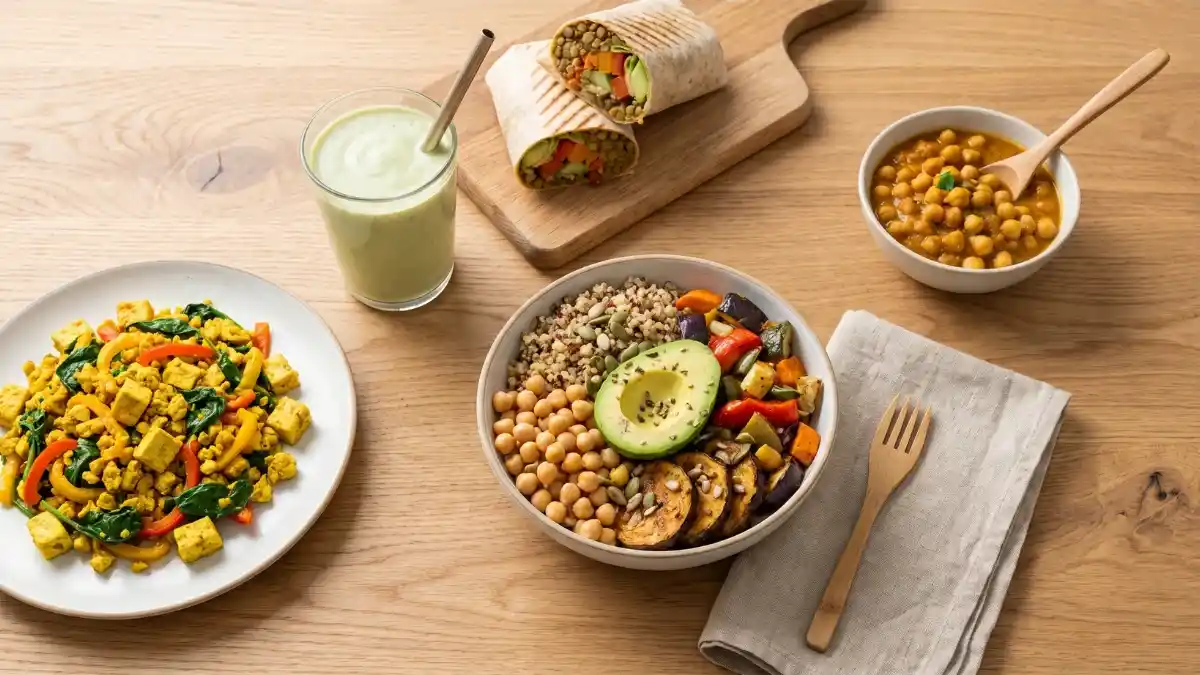
Are you switching to a plant-based diet and wondering if you’re getting enough protein? It’s the most common question vegan eaters face. The answer is yes—but it requires knowing which foods to rely on and how to spread them across your day.
These high protein vegan recipes are built for practical, everyday kitchens and schedules, not idealized meal plans. Whether you’re batch cooking on Sunday or throwing something together before work, there’s something here that fits your schedule and dietary needs.
This guide brings together simple, practical, high protein vegan recipes you can use every day.
If your goal is fat loss alongside high-protein intake, this vegan meal-prep guide for weight loss shows how to structure your meals throughout the week.
For a broader overview of plant-based protein, the Academy of Nutrition and Dietetics provides a clear explanation in this guide.
Table of Contents
How Much Protein Do You Need on a Vegan Diet?
Daily Protein Needs: General vs Active People
The general guideline is 0.8g of protein per kilogram of body weight daily — around 56g for a 70kg adult. If you’re training regularly, that rises to 1.4–2.0g per kg. At 70kg, that’s 98–140g, which requires planning but is achievable with whole-plant-based foods.
Vegan Protein for Muscle Gain
Building muscle on a vegan diet works — the key is to eat slightly more total protein to compensate for lower leucine levels in most plant proteins, and to pair foods to cover all essential amino acids.
For high protein plant based meal ideas that support muscle building, focus on combinations such as lentils with rice, tofu with quinoa, and edamame in whole-grain wraps. You’ll find practical examples throughout.
Common Mistakes to Avoid
- Leaning too heavily on vegetables. Spinach and broccoli help, but won’t meet your daily protein needs on their own.
- Skipping breakfast protein. Starting with mostly carbs makes it much harder to hit daily targets.
- Eating the same protein source daily. Rotating legumes, soy foods, and grains improves amino acid coverage.
- Underestimating portions. A small handful of chickpeas contributes very little — be generous.
Best High-Protein Plant-Based Ingredients
Legumes
Lentils (~18g protein per cooked cup), chickpeas (~15g), black beans, kidney beans, and edamame are your staples. Cheap, shelf-stable, and versatile for use in soups, curries, salads, and wraps.
Soy-Based Foods
Tofu, tempeh, and edamame are among the most complete plant proteins available. Tempeh leads at around 30g per cup and absorbs marinades brilliantly. Firm tofu works well for scrambles and bakes; silken tofu blends well into smoothies and sauces.
Whole Grains
Quinoa is one of the few plant foods with all nine essential amino acids — about 8g per cooked cup. Rolled oats deliver about 6g per half-cup raw, along with slow-release energy.
Nuts and Seeds
Hemp seeds offer around 10g of complete protein per three tablespoons. Chia, pumpkin, and sunflower seeds add meaningful protein alongside healthy fats — useful as toppings, blended into smoothies, or stirred through oats.
When Protein Powder Is Useful
Whole foods cover most protein needs, but on busy days, a high-quality plant-based protein powder can help hit daily protein targets more easily.
If you avoid gluten and dairy, check this guide on the best dairy-free gluten-free protein powder (2026)—and for a deeper breakdown, see our complete gluten-free dairy-free protein guide.
High-Protein Vegan Breakfast Recipes
Each of these hits at least 18g of protein, takes under 20 minutes (or can be prepped the night before), and actually tastes good.
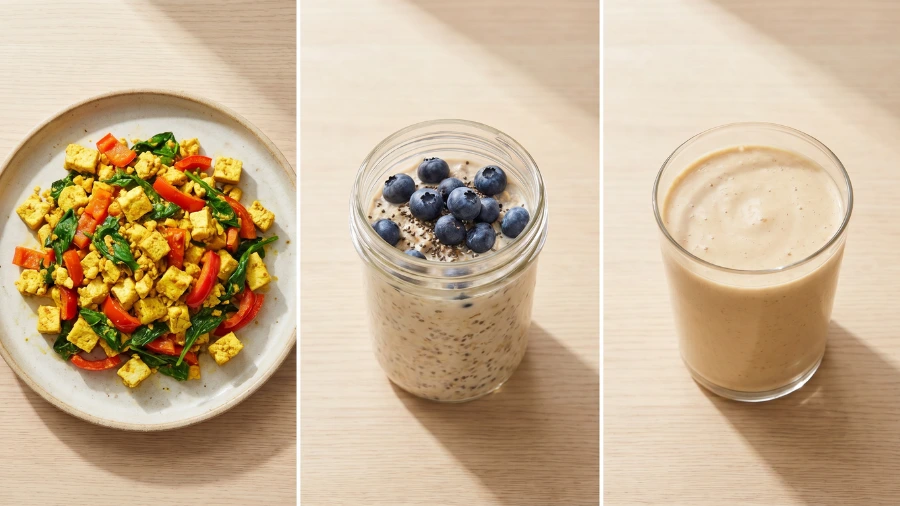
1. Turmeric Tofu Scramble with Spinach and Bell Peppers
Protein per serving: ~22g | Prep + Cook Time: 15 minutes
Ingredients:
- 300g firm tofu, pressed and crumbled
- 1 tsp turmeric
- 1/2 tsp garlic powder
- 1 tbsp nutritional yeast
- 1 cup baby spinach
- 1/2 red bell pepper, diced
- 1 tsp olive oil
- Salt and black pepper to taste
Instructions:
- Heat olive oil in a non-stick pan over medium heat.
- Add crumbled tofu and cook for 3–4 minutes, stirring occasionally.
- Stir in turmeric, garlic powder, and nutritional yeast.
- Add bell pepper and cook for 2 minutes, then fold in spinach.
- Season and serve, ideally with whole-grain toast.
2. Hemp Seed and Almond Butter Overnight Oats
Protein per serving: ~20g | Prep Time: 5 minutes (set overnight)
Ingredients:
- 80g rolled oats
- 250ml unsweetened soy milk
- 2 tbsp almond butter
- 3 tbsp hemp seeds
- 1 tbsp chia seeds
- 1 tsp maple syrup
- A handful of blueberries to serve
Instructions:
- Combine all ingredients except blueberries in a jar. Stir well, cover, and refrigerate overnight.
- In the morning, stir and add a splash of soy milk if it’s too thick. Top with blueberries.
3. Soy Protein Smoothie with Banana and Peanut Butter
Protein per serving: ~18–24g | Prep Time: 5 minutes
Ingredients:
- 1 frozen banana
- 250ml unsweetened soy milk
- 2 tbsp peanut butter
- 1 tbsp flaxseeds
- Optional: 1 scoop plant-based protein powder
- Ice cubes, if desired
Instructions:
- Add all ingredients to a blender.
- Blend on high for 45–60 seconds until smooth. Serve immediately.
You can explore more ideas in our guide on vegan protein powder recipes for every meal.
High-Protein Vegan Lunch Ideas
Lunch is where most people’s protein intake tends to fall short. These easy vegan protein recipes for beginners are straightforward to batch-cook and hold up well as leftovers.
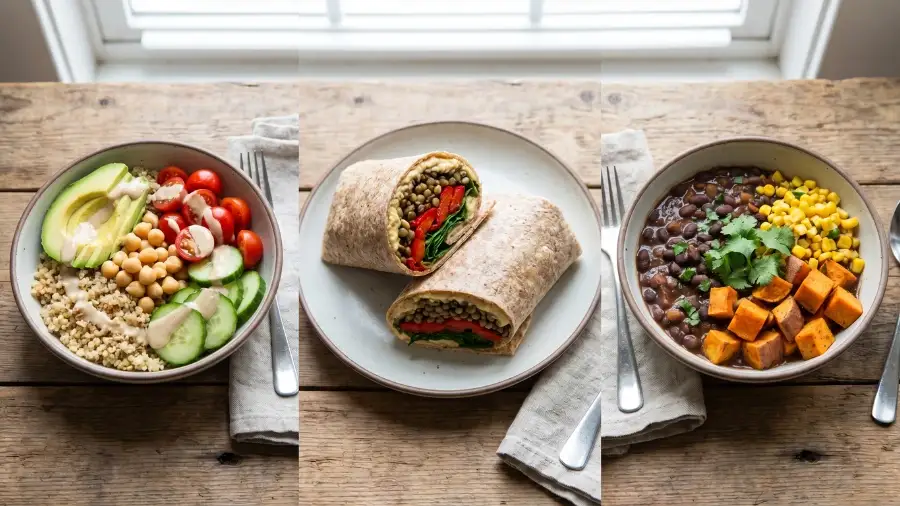
1. Quinoa and Chickpea Power Bowl
Protein per serving: ~23g | Prep + Cook Time: 20 minutes
Ingredients:
- 150g cooked quinoa
- 120g canned chickpeas, drained and rinsed
- 1/2 cucumber, diced
- 1 cup cherry tomatoes, halved
- 2 tbsp tahini
- 1 tbsp lemon juice
- 1 tsp olive oil
- Salt, paprika, and cumin to taste
Instructions:
- Cook the quinoa according to the package directions and allow it to cool slightly.
- Optional: roast chickpeas with olive oil, paprika, and cumin at 200°C for 12 minutes.
- Whisk tahini with lemon juice and a splash of water until smooth and pourable.
- Assemble the bowl with quinoa base, vegetables, chickpeas, and a drizzle of tahini.
2. Lentil and Roasted Veggie Stuffed Wrap
Protein per serving: ~20g | Prep + Cook Time: 25 minutes
Ingredients:
- 200g cooked green or puy lentils
- 1/2 zucchini, sliced and roasted
- 1/2 red pepper, roasted
- 2 tbsp hummus
- 2 whole-grain wraps
- A handful of baby spinach
- 1/2 tsp smoked paprika
Instructions:
- Toss zucchini and red pepper with olive oil and paprika, roast at 190°C for 18–20 minutes.
- Spread hummus on each wrap, layer spinach, lentils, and roasted veg.
- Roll tightly, slice in half. Serve cold or lightly toasted.
3. Spiced Black Bean and Sweet Potato Bowl
Protein per serving: ~18g | Prep + Cook Time: 30 minutes
Ingredients:
- 1 medium sweet potato, cubed
- 200g canned black beans, drained
- 150g cooked brown rice
- 1 tsp cumin
- 1 tsp smoked paprika
- 1/2 avocado, sliced
- Lime juice and fresh coriander to serve
Instructions:
- Roast sweet potato with cumin and paprika at 200°C for 22–25 minutes.
- Warm black beans with a pinch of cumin and salt.
- Assemble: rice base, sweet potato, black beans, avocado, lime, and coriander.
High-Protein Vegan Dinner Recipes
Dinner is where you can really load up on protein after a full day. These three vegan protein meals for muscle gain are filling, flavourful, and easy to batch.
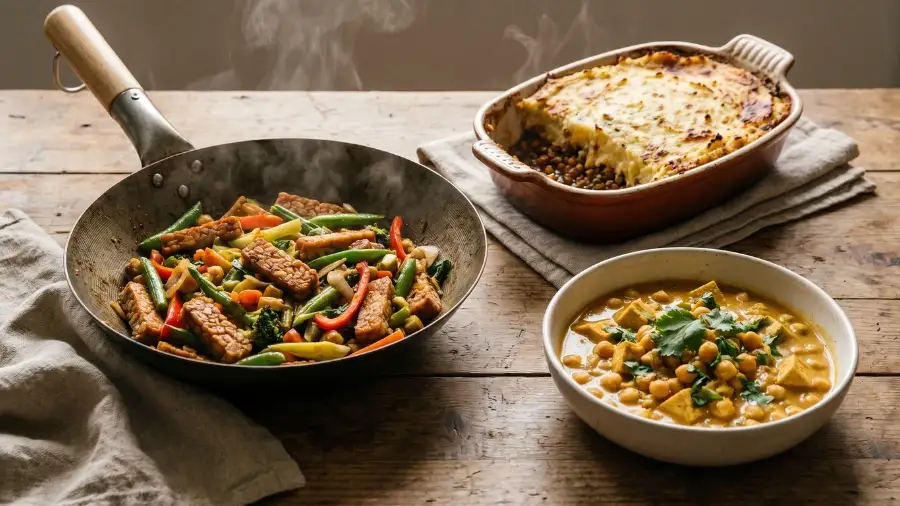
1. Marinated Tempeh Stir-Fry with Brown Rice
Protein per serving: ~30g | Prep + Cook Time: 25 minutes (plus 30 min marinating)
Ingredients:
- 200g tempeh, sliced into strips
- 2 tbsp soy sauce or tamari
- 1 tsp sesame oil
- 1 tsp ginger, grated
- 1 garlic clove, minced
- 1 cup broccoli florets
- 1 red bell pepper, sliced
- 150g cooked brown rice
Instructions:
- Mix soy sauce, sesame oil, ginger, and garlic. Marinate tempeh for at least 30 minutes.
- Cook the tempeh in a hot wok for 3–4 minutes per side, until golden.
- Add broccoli and bell pepper, stir-fry 4–5 minutes.
- Serve over brown rice.
2. Red Lentil Shepherd’s Pie
Protein per serving: ~22g | Prep + Cook Time: 45 minutes
Ingredients:
- 200g red lentils, rinsed
- 400g canned chopped tomatoes
- 1 onion, diced
- 2 carrots, diced
- 2 garlic cloves, minced
- 1 tsp smoked paprika
- Topping: 500g potatoes, boiled and mashed with plant-based milk and olive oil
Instructions:
- Soften the onion, carrots, and garlic in a pan for 5 minutes.
- Add lentils, tomatoes, paprika, and 300ml water. Simmer 20 minutes.
- Pour into a baking dish, top with mash, and bake at 190°C for 20 minutes.
3. Chickpea and Tofu Coconut Curry
Protein per serving: ~24g | Prep + Cook Time: 30 minutes
Ingredients:
- 200g firm tofu, cubed
- 200g canned chickpeas, drained
- 400ml light coconut milk
- 200g canned chopped tomatoes
- 1 onion, diced
- 2 tsp curry powder
- 1 tsp turmeric
- Fresh coriander and cooked quinoa to serve
Instructions:
- Pan-fry the tofu until golden on both sides, then set aside.
- Cook the onion until soft. Add curry powder and turmeric, cook 1 minute.
- Add coconut milk, tomatoes, and chickpeas. Simmer 12–15 minutes.
- Stir in tofu and serve over quinoa with coriander.
High-Protein Vegan Meal Prep Tips
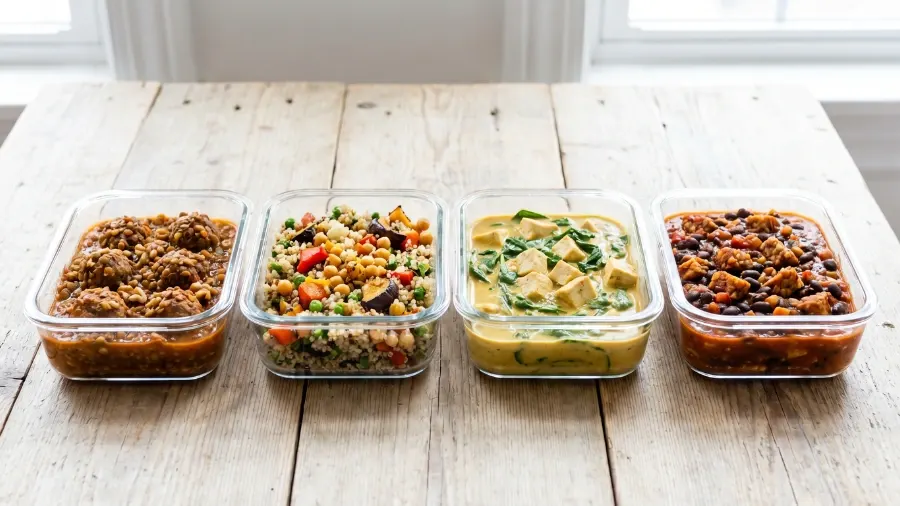
Simple 3-Day Prep Plan
On Sunday, cook a big batch of grains (quinoa or brown rice), a pot of legumes (lentils or chickpeas), and prep vegetables for roasting or stir-frying.
- Day 1 — Lunch: Quinoa chickpea bowl. Dinner: Tempeh stir-fry.
- Day 2 — Lunch: Lentil wrap. Dinner: Shepherd’s pie.
- Day 3 — Lunch: Sweet potato black bean bowl. Dinner: Reheated chickpea tofu curry.
Batch Cooking Tips
- Cook 500g dry lentils at once — fridge for 5 days or freeze well.
- Roast two full trays of vegetables in one session.
- Double the curry and freeze half in individual portions.
- Overnight oats prep 3 days ahead; they get better after day 2.
Storage Tips
- Grains and legumes: an airtight container, fridge, up to 5 days.
- Curries and stews: freeze flat in zip-lock bags, up to 3 months.
- Cut vegetables: dry thoroughly, keep up to 4 days.
If you want a complete vegan meal prep for weight loss plan with ready-to-follow recipes, this guide breaks down a simple weekly structure built around high-protein meals.
High-Protein Vegan Recipes for Muscle Gain
Consistency matters more than any single meal. Here’s a realistic daily plan targeting 120–130g of protein for a 70–80kg active person, built entirely from recipes in this guide.
- Breakfast: Hemp seed overnight oats + 1 tbsp almond butter (20g)
- Mid-morning: 100g edamame + small handful pumpkin seeds (15g)
- Lunch: Quinoa chickpea bowl (23g)
- Afternoon: Soy milk smoothie with peanut butter, optional powder (18–24g)
- Dinner: Tempeh stir-fry with brown rice (30g)
- Evening: 2 tbsp hemp seeds on soy yoghurt (10g)
Total: 116–122g from whole foods, with powder as an optional top-up.
If you need to cover protein without gluten or dairy, see our complete guide on how to get protein when gluten and dairy-free.
Nutritional Comparison Table
Protein estimates are approximate per serving, based on standard ingredient weights.
Here’s a quick comparison of protein content across all recipes:
| Recipe | Protein per Serving | Meal Type |
|---|---|---|
| Turmeric Tofu Scramble | ~22g | Breakfast |
| Hemp Seed Overnight Oats | ~20g | Breakfast |
| Soy Smoothie with Peanut Butter | ~18–24g | Breakfast |
| Quinoa Chickpea Power Bowl | ~23g | Lunch |
| Lentil Veggie Stuffed Wrap | ~20g | Lunch |
| Black Bean Sweet Potato Bowl | ~18g | Lunch |
| Tempeh Stir-Fry with Brown Rice | ~30g | Dinner |
| Red Lentil Shepherd’s Pie | ~22g | Dinner |
| Chickpea & Tofu Coconut Curry | ~24g | Dinner |
Common Mistakes in Vegan Protein Intake
- Treating vegetables as your main source. Spinach is nutritious, but you would need significantly large quantities to hit daily protein targets.
- Not tracking at all. Even a rough daily estimate helps you catch gaps before they become habits.
- Skipping breakfast protein. It’s nearly impossible to catch up by dinner.
- Over-relying on nuts. Calorie-dense and not the most efficient source per calorie — use them as a complement.
- Avoiding soy without a medical reason. Tofu and tempeh are among the most complete, efficient plant proteins — the concerns around them aren’t well supported by evidence.
- Ignoring cooking methods. Marinated tempeh and plain boiled lentils taste completely different. Variety keeps it sustainable.
FAQs
Can you get enough protein on a vegan diet?
Yes. It requires variety — rotating across legumes, soy foods, whole grains, and seeds — rather than relying on a single source. Many plant-based athletes meet their high protein targets solely through diet.
What are the cheapest vegan protein sources?
Lentils, split peas, and canned chickpeas. A 500g bag of red lentils is inexpensive and covers several high-protein meals. Tofu and frozen edamame are affordable and widely available, too.
Do you need protein powder on a vegan diet?
No, but it’s useful in certain situations—such as heavy training, low appetite, or quick post-workout recovery. It’s a convenient top-up, not a substitute for a full meal.
Which plant protein is most complete?
Soy foods (tofu, tempeh, edamame) and quinoa provide all nine essential amino acids. Hemp seeds are very close. Most other plant proteins pair well together across meals to cover the full amino acid spectrum.
How do I meal prep for a high-protein vegan week?
Batch-cook a pot of lentils, a tray of baked tempeh, and a big batch of quinoa. Add roasted vegetables and two or three sauces. Mix and match across the week without eating the same meal twice.
Conclusion
Plant-based protein is straightforward once you build the right habits. These recipes are designed to be repeatable — practical enough to work on a Tuesday as well as a Sunday. Start with one or two that appeal to you, get comfortable with the prep, then add variety over time. Pay attention to energy, recovery, and satiety — those are your real signals that protein intake is where it needs to be.